If you’ve been trying to keep up with the rapid evolution of AI, Anthropic’s September 2026 releases just shifted the landscape again. The introduction of the Claude 5.5 series has redefined what we expect in terms of speed, cost, and raw intelligence.
But with multiple models available, a common question is dominating search trends: Which Claude model should I actually use?
Whether you are automating workflows, writing SEO-optimized content, or building complex applications, choosing the right model can dramatically impact both your performance and your API bill. Here is a breakdown of Claude Opus 5.5, Claude Fable 5.1, and Claude Haiku 4.5—and exactly when to deploy each.
Meet the New Lineup
Anthropic’s current ecosystem is built around giving users a spectrum of choices based on effort, context, and cost.
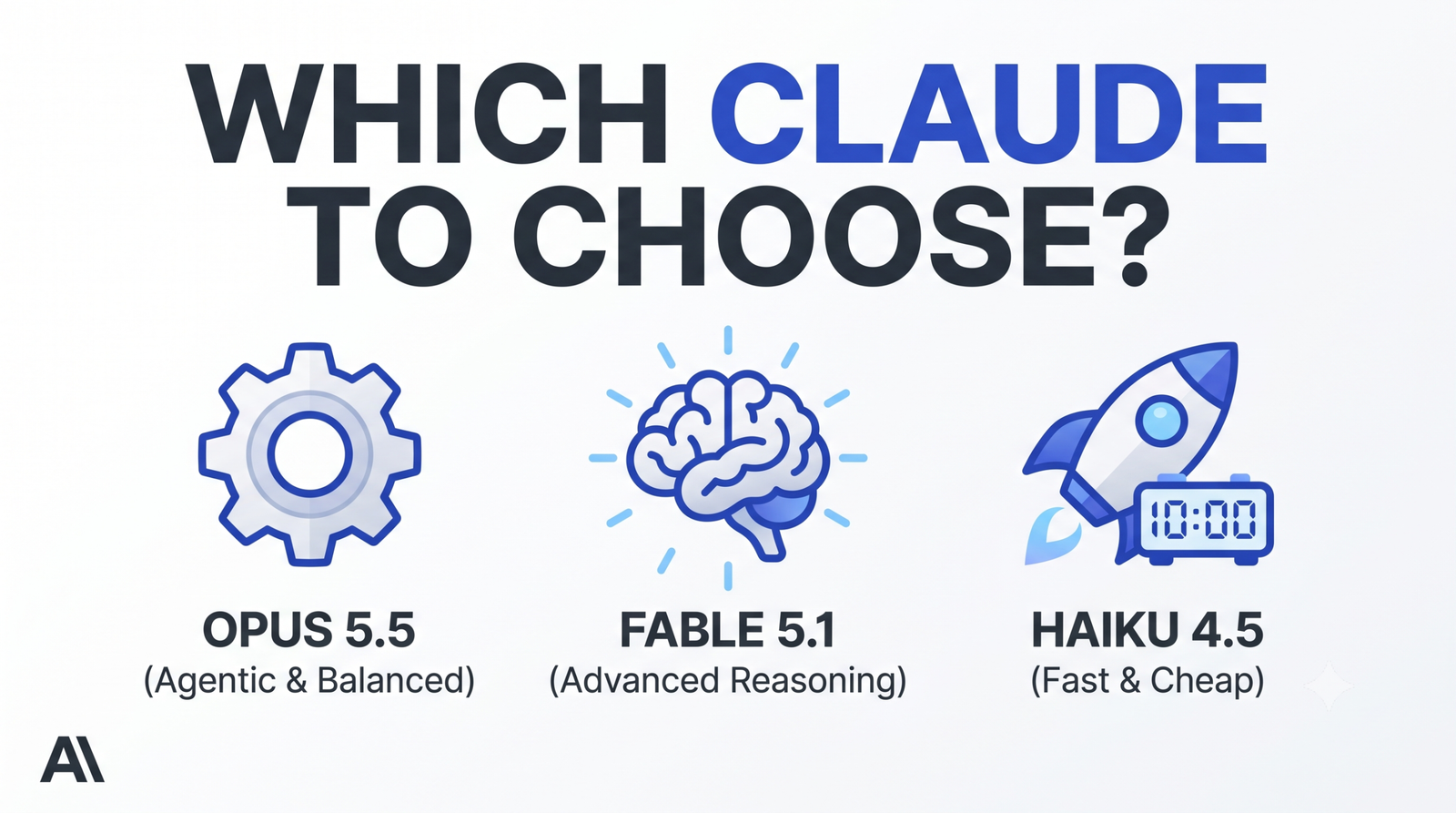
- Claude Opus 5.5 (The Cost-Efficient Workhorse): Released on September 22, 2026, Opus 5.5 is the new standard for daily heavy lifting. It slashed the cost of its predecessor by 40% while generating output over 30% faster. It operates at a “Medium” effort default, making it the go-to for writing, research, and most coding tasks.
- Claude Fable 5.1 (The Heavyweight Thinker): Released earlier in September, Fable 5.1 remains the premium frontier model. Priced higher than Opus, it defaults to a “High” effort setting and is reserved for the most intricate, demanding reasoning.
- Claude Haiku 4.5 (The Speed Demon): For high-volume, straightforward tasks where instant speed and low compute costs are the absolute priority, Haiku 4.5 remains unmatched for efficiency-first development.
Top Use Cases for the New Models
For Writers & SEO Strategists
To write with Claude without sounding like a generic AI, Opus 5.5 is currently the strongest option. It has been expressly optimized to put key information first and avoid robotic jargon. When executing Generative Engine Optimization (GEO) briefs, you can feed Opus 5.5 your brand voice guidelines, and its massive 1-million-token context window will maintain that human tone flawlessly across long-form documents.
For Coders & Data Analysts
Opus 5.5 excels at long-horizon agentic work. If you are analyzing financial markets by writing Python scripts with yfinance to calculate stock Beta relative to the Nifty 50, Opus 5.5 can handle the entire script generation, optimization, and debugging process. In internal tests, it even managed a 680,000-line code migration in less than a day.
Fable 5.1 should be deployed specifically as your escalation tier. When you are dealing with deeply embedded bugs, complex architectural conflicts, or strict logic conditions that Opus 5.5 misses, Fable 5.1 brings the deeper “thinking” necessary to crack the problem.
How to Choose the Right Model
The Default-to-Opus Strategy: Start almost every task with Claude Opus 5.5. Because it matches Fable 5.1’s performance on the vast majority of workloads but uses far fewer compute resources, it is the most logical starting line.
The Fable Escalation: Evaluate Opus 5.5’s output. If you are working on a demanding reasoning problem and Opus keeps missing a crucial nuance, switch that specific prompt over to Fable 5.1.
The Haiku Downscale: If Opus 5.5 accomplishes the task perfectly but you need to run that exact prompt 10,000 times a day (like categorizing support tickets or formatting raw data), downscale the task to Haiku 4.5 to save time and API costs.
The true power of Anthropic’s current lineup isn’t just in the intelligence of a single model—it’s in routing your tasks to the exact right level of cognitive effort.
Explore – Technology